Guide to Building Pergolas in Victoria
If you are planning to build a pergola in Victoria, one of the first questions you may ask is whether you need a building permit.
The answer depends on the size, height, location and design of the pergola. While some small pergolas may be exempt, many require a building permit under the Victorian Building Regulations.
This guide explains when a pergola requires a permit, when it may be exempt, and what you need to consider before starting construction.
What Is Considered a Pergola?
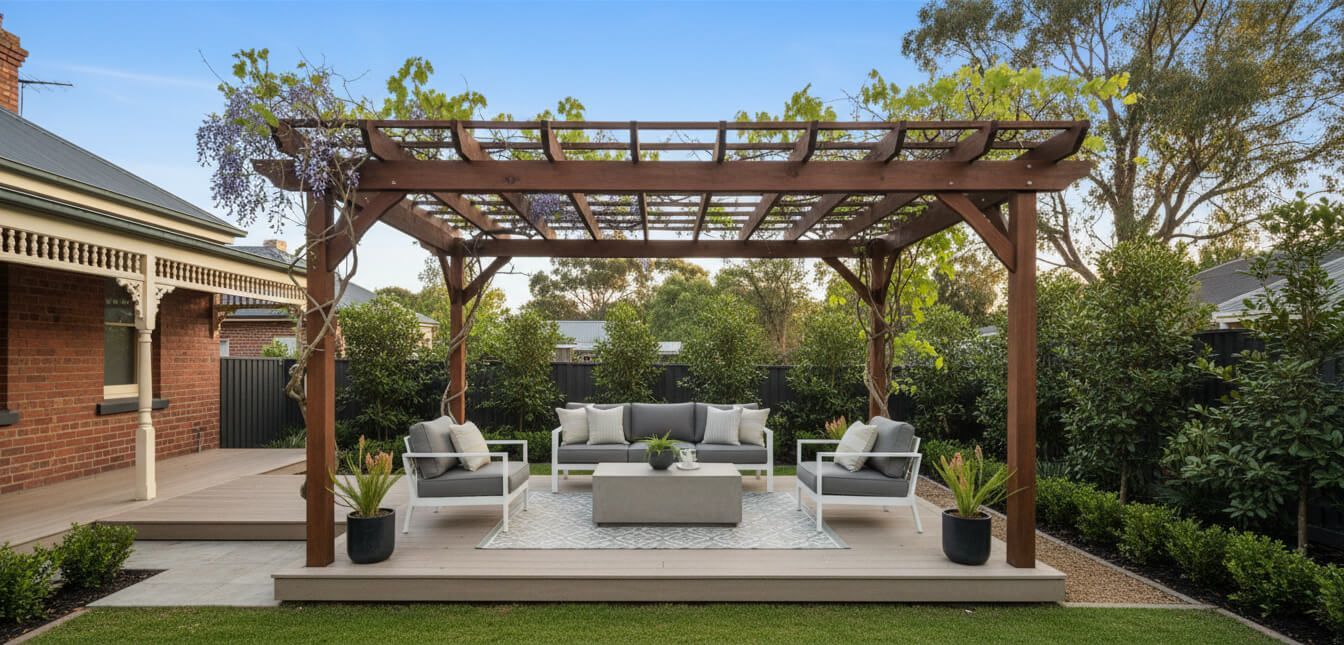
In Victoria, a pergola is generally defined as an open structure that:
- Is not roofed with solid materials
- Is not fully enclosed with walls
If the structure has a solid roof it is classified as a verandah, or an extension, this will change the permit requirements.
Because permit requirements depend on your pergola’s size, height, roof type and location, it’s essential to confirm your situation with a registered building surveyor.
Do You Need a Building Permit for a Pergola in Victoria?
A building permit can be required for a pergola unless they meet specific exemption criteria under Schedule 3 of the Building Regulations 2018.
A pergola may not require a permit if:
- The floor area is less than 20m²
- It is no more than 3.6 metres high
- For a pergola associated with a Class 1 building (detached dwelling), it must not be positioned more than 2.5 metres in front of the building’s front wall
All exemption conditions must be satisfied. If even one condition is not met, a building permit is required.
Many homeowners incorrectly assume their pergola is exempt, only to discover later that a permit was required. This can result in building notices, fines, or issues when selling the property.
What About Planning Permits?
In addition to a building permit, you may also need a planning permit depending on:
- Your property zoning
- Whether you are in a heritage overlay
- Whether your land is affected by bushfire, flooding or environmental overlays
- The location of the pergola on the block
It is important to check with your local councils Planning Department before proceeding.
If required, a planning permit, must be obtained before a building permit can be issued.
Structural and Safety Requirements
If a building permit is required, your pergola must comply with:
- The National Construction Code
- Victorian Building Regulations
- Structural adequacy requirements
- Wind load classifications
- Termite protection requirements where applicable
- Boundary setback and height provisions
Engineering computations may be required, particularly for larger or attached structures.
Common Mistakes to Avoid
Homeowners and builders often run into issues due to:
- Building without confirming permit requirements
- Assuming a pergola is exempt because it is “open”
- Installing roofing after construction, changing its classification
- Building over easements without consent
- Not considering boundary setbacks
Rectifying non-compliant pergolas can be costly and stressful. Code HQ can assist you in determining what requirements may apply.
What Is the Process to Obtain a Pergola Building Permit?
If a permit is required, the process generally involves:
- Preparing detailed plans and specifications
- Obtaining engineering where required
- Lodging an application with a registered building surveyor
- Receiving building permit approval
- Completing mandatory inspections during construction
- Obtaining a Certificate of Final Inspection
Do not commence work until the building permit has been issued.
Pergola vs Verandah: What’s the Difference?
Understanding the definition matters because permit requirements can vary.
- Pergola: An open structure with exposed beams and no solid roof (or a permeable roof covering).
- Verandah: A roofed structure attached to a dwelling, with one or more open sides.
In most cases, a verandah is treated as an extension to the home, which automatically triggers a building permit requirement.
Need Help With a Pergola Permit in Victoria?
If you are unsure whether your proposed pergola requires a building permit, it is best to seek professional advice before construction begins.
Code HQ can review your plans, confirm requirements, and guide you through the approval process.
Getting clarity early can save time, money and stress later.